Research
What I work on
I build differentiable methods that respect the physics of the systems they describe, from planetary atmospheres to seismic waves to the human brain.
PhD · ongoing
Exoplanet atmospheres with JWST
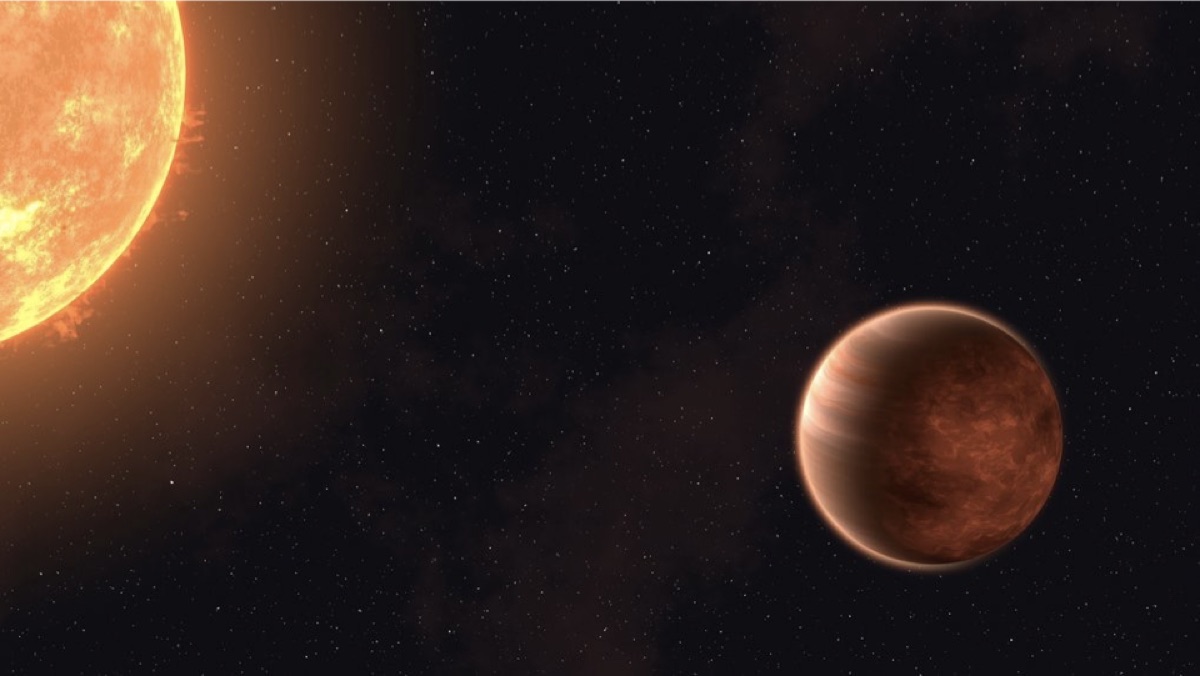
JWST measures spectra of planets hundreds of light-years away. Inferring atmospheric composition from those measurements requires accounting for the telescope, detector and the planet’s transit.
I develop physics-based, differentiable methods for analysing JWST observations of transiting exoplanets. More details will follow once the first papers are out. In the meantime, my interactive explainer on transmission spectroscopy covers the foundations this work builds on.
HomanLab · Zürich
How the brain follows a story
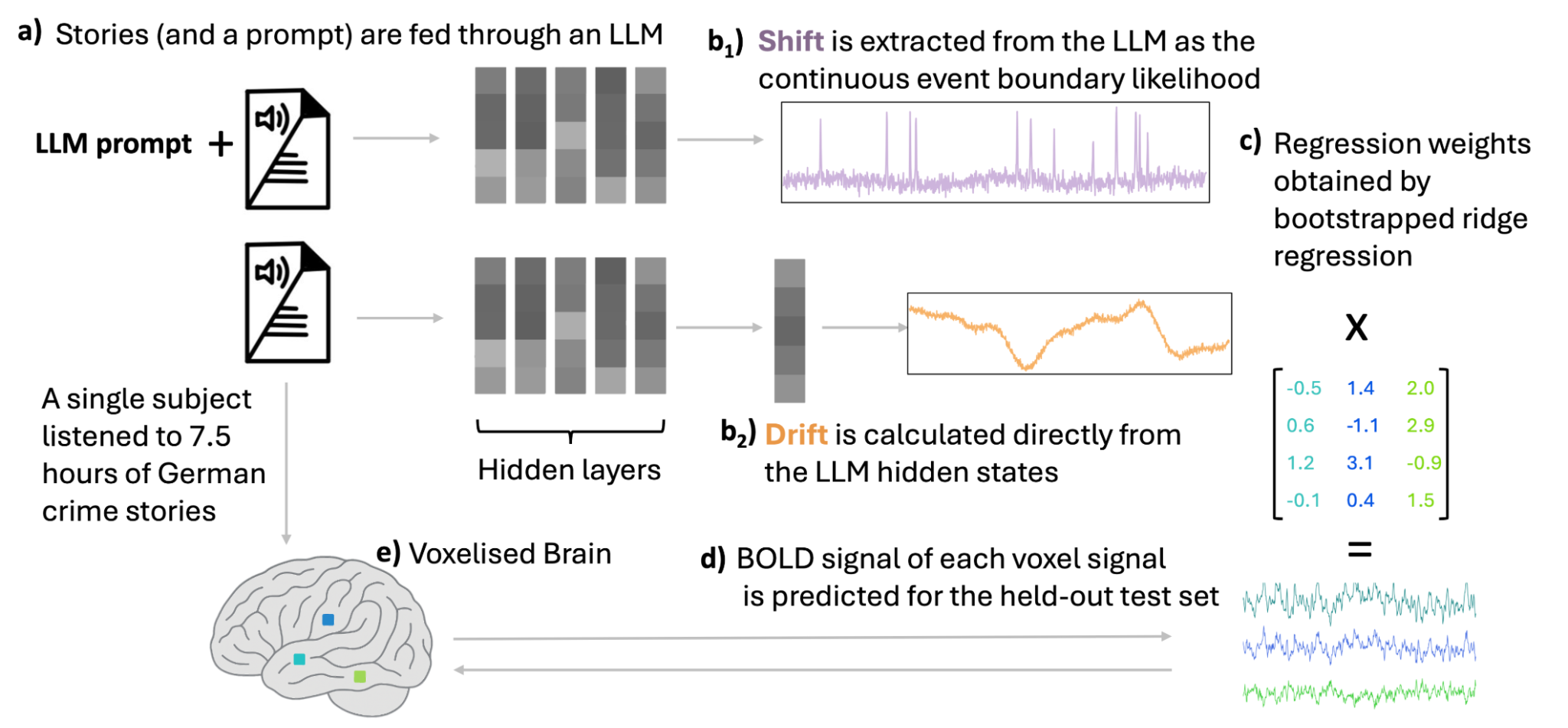
At the HomanLab within the Psychiatric University Hospital of Zürich, I explored how our brains follow the flow of stories. Working with a language model, we distilled two simple signals from narratives: a drift signal capturing the gradual build-up of meaning, and a shift signal that spikes when the story moves to a new event or scene.
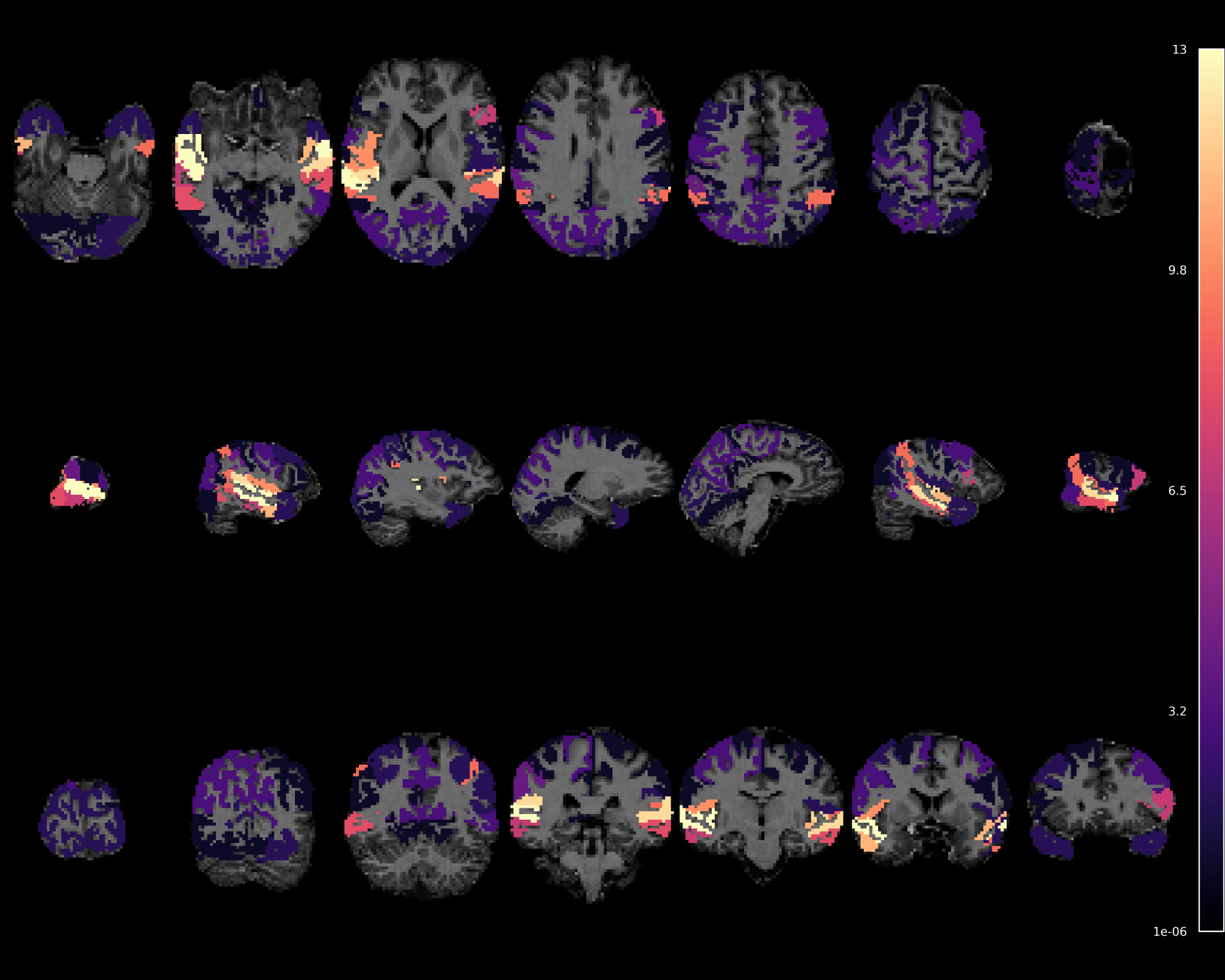
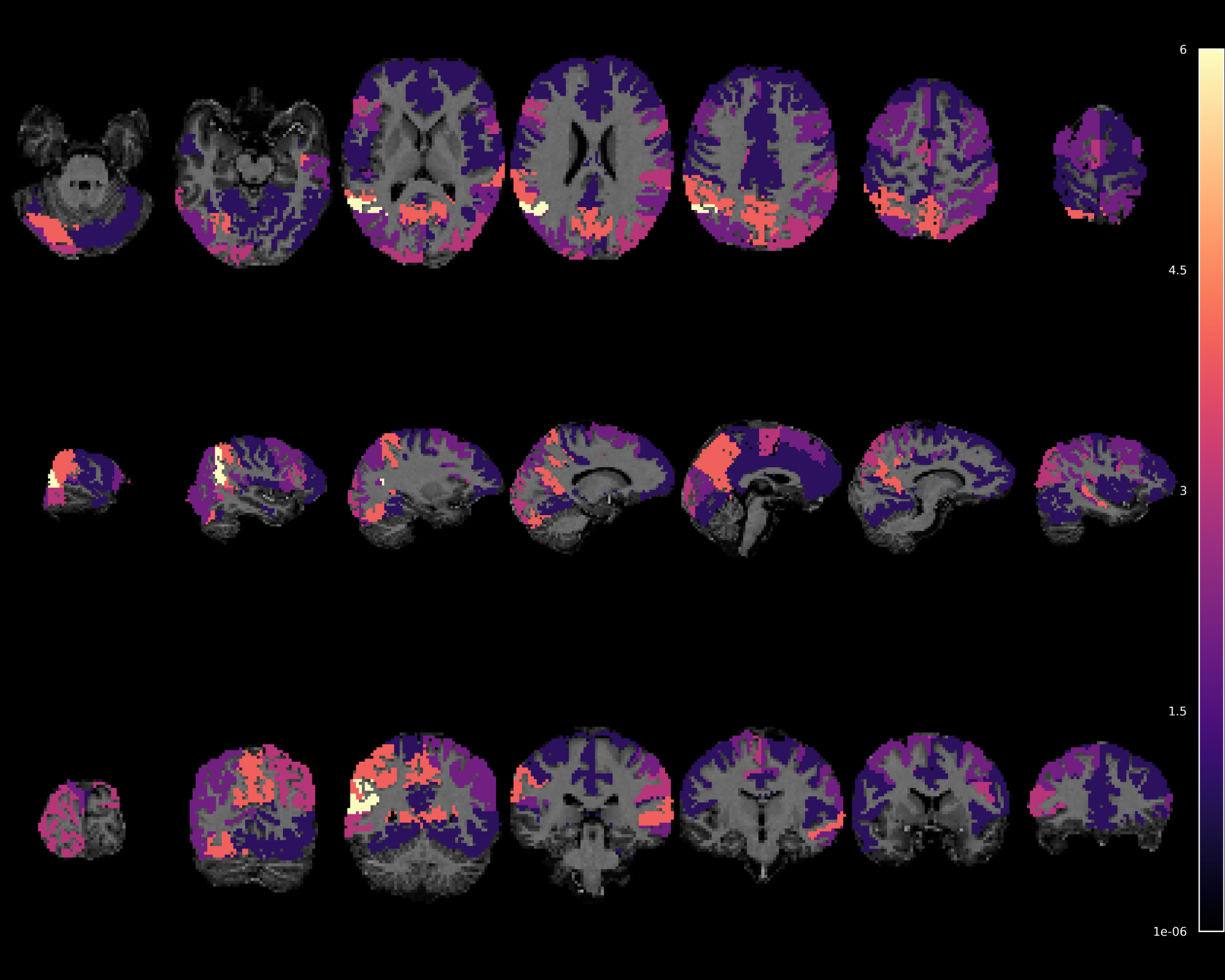
Compared against high-resolution fMRI recordings of a volunteer listening to crime stories, the burst-like shift signal lit up the brain's speech and hearing centres, while the slow drift signal was strongest in the default-mode network, in regions like the angular gyrus and precuneus that support memory and imagination. The auditory response was associated with event boundaries. Changes in the broader networks tracked the story’s evolving context.
Master's thesis · ETH Zürich
Physics-informed neural networks for seismology
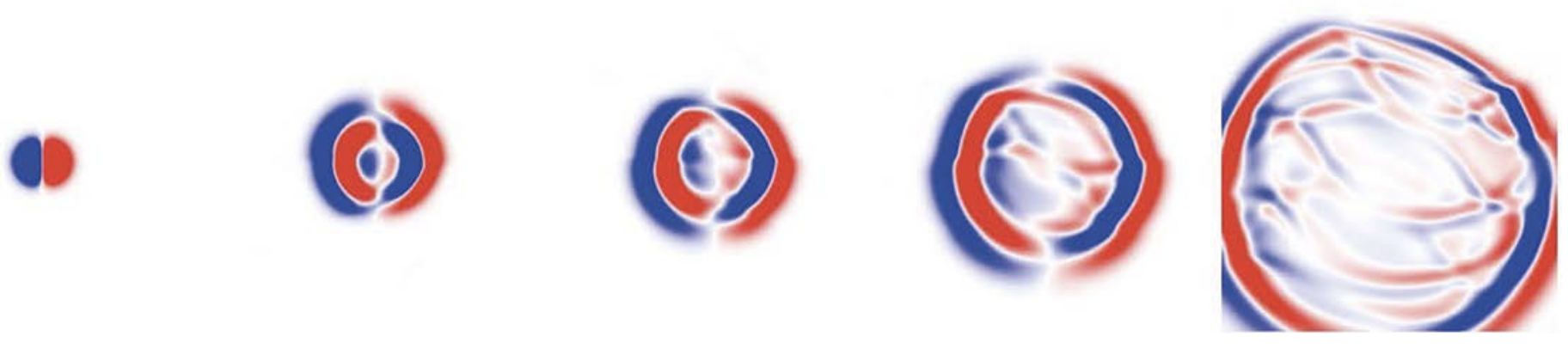
My master's thesis investigated physics-informed neural networks (PINNs) for solving the elastic wave equation, which describes how seismic waves travel through the Earth. By embedding wave physics directly into the architecture, using custom wavelet and plane-wave layers with encoder and decoder components, the networks were roughly twice as accurate as standard PINNs.
Conditioning the networks on the seismic source location lets them infer the wavefield for any source position in a single forward pass, far faster than traditional finite-difference solvers. The thesis was featured in the British Seismology Meeting 2024 report in Astronomy & Geophysics.
Publications
2025
2026
ETH Zürich · 2024
Full list on Google Scholar.