Interactive explainer
Reading the air of other worlds
We cannot visit a planet 300 light-years away, and only a few dozen exoplanets have ever been photographed directly. Still, we know what some of their skies are made of. This post explains how, and lets you try each step yourself.
01 · The census
A galaxy full of strange worlds
When the 1990s began, every planet we knew orbited our own Sun. Today we have confirmed more than 6,000 planets around other stars, and most of them look nothing like the planets of our Solar System.
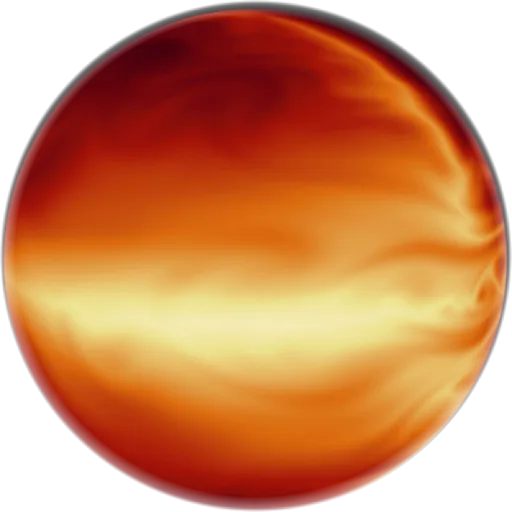
Massive, hydrogen-rich worlds like Jupiter. Some orbit so close to their star that their year lasts a few days.
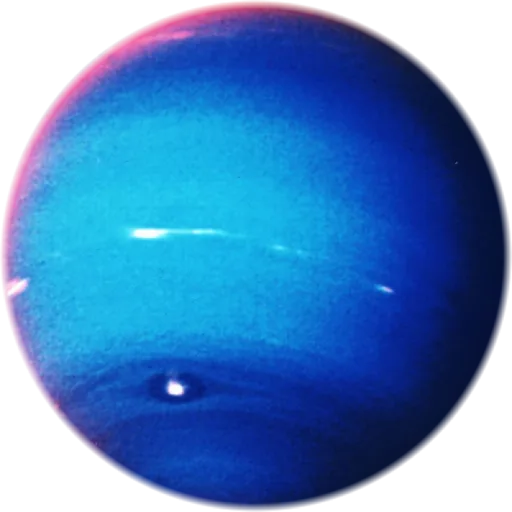
Icy, gaseous planets like Neptune. The most common type found so far.
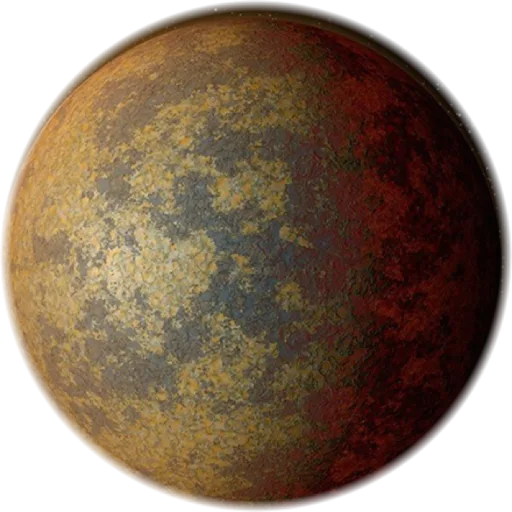
Rocky worlds larger than Earth but smaller than Neptune. We have no local example at all.
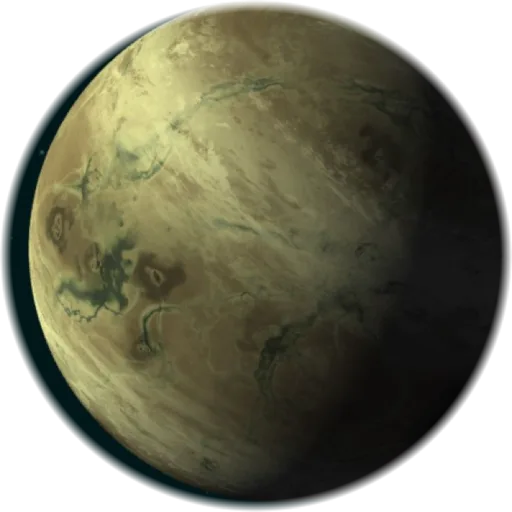
Small and rocky, like Earth or Mars. Rare in the catalogue, mostly because they are the hardest to find.
Sorted by temperature
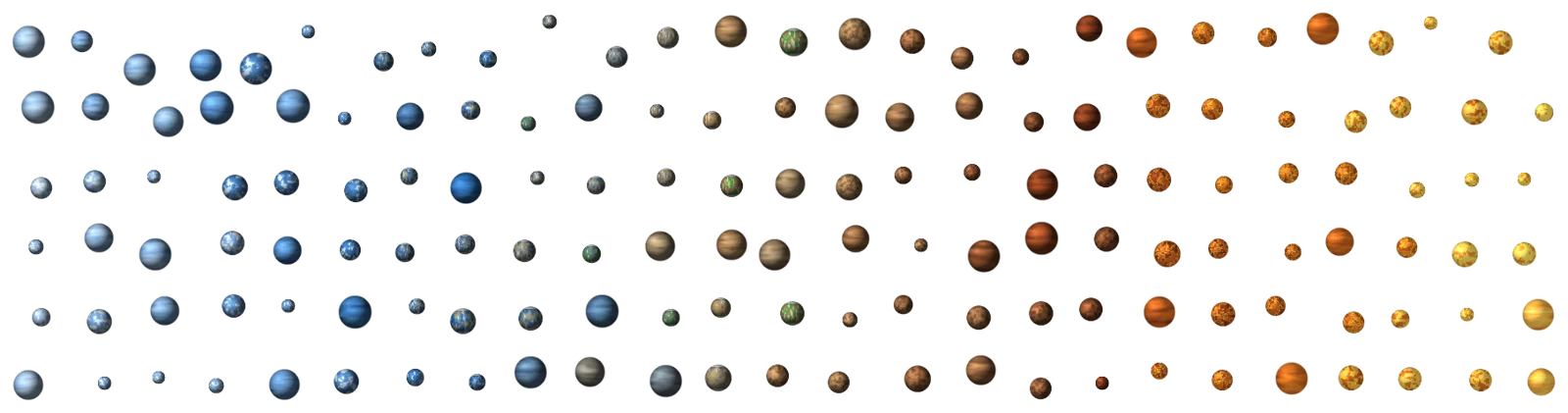
Known planets cover a huge range of temperatures, from colder than Pluto to hotter than some small stars. Here are a few of my favourites, from coldest to hottest. Click on one to read more.
02 · The hunt
From the first discoveries to atmospheric spectra
Planet searches have built a large catalogue of worlds. Follow-up observations measure their masses and sizes, and for some planets, the gases in their atmospheres.
Hubble enters orbit
Hubble was not built for exoplanets, since none were known at launch. It ended up playing a big role in this field anyway.
Planets around a pulsar
The first confirmed exoplanets were found with the Arecibo radio telescope around a pulsar, the collapsed core of an exploded star. The two rocky worlds orbit in its intense radiation.
51 Pegasi b: a giant on a four-day orbit
The ELODIE spectrograph caught the star 51 Pegasi wobbling, tugged by an unseen giant planet racing around it every 4.2 days. From Earth the planet never passes in front of its star, so its discovery relied on this wobble, seen as spectral lines shifting back and forth between blue and red. The discovery earned a Nobel Prize.
HD 209458 b crosses its star
For the first time, a planet was caught crossing in front of its star, dimming it by about 1.5%. This transit method became astronomy's main planet-finding tool.
Atmospheric sodium detected
During transits of HD 209458 b, Hubble saw the star's sodium line get slightly deeper. Starlight was filtering through the planet's atmosphere on its way to us. It was the first chemical identification of an exoplanet atmosphere.
Kepler’s planet survey
Kepler stared at one patch of sky for years, watching 150,000 stars for tiny transit dips. It alone confirmed over 2,700 planets and taught us that planets outnumber stars.
TESS searches nearby bright stars
TESS scans almost the entire sky for transiting planets around nearby, bright stars, whose planets are accessible to detailed follow-up observations.
Infrared spectroscopy with Webb
Webb’s 6.5 metre mirror collects enough light to measure how transit depth changes with wavelength. Those differences can identify gases in a planet’s atmosphere.
03 · The trick
Watch a planet cross its star
Here is a star, a planet, and a light meter. When the planet crosses the stellar disc, it blocks a tiny fraction of the light. That dip in brightness is a transit. The size of the dip tells us how much of the star the planet blocks.
04 · Inside the telescope
One stripe of starlight
In the demo you measured the dip one colour at a time. JWST records all of them at once. Its NIRISS instrument, in a mode called SOSS, stretches the star's light into a single curved stripe on the detector. Position along the stripe is wavelength: one end is the blue side of the spectrum, the other end the red side.
Below is a transit as the detector sees it. When the planet crosses its star, the whole stripe dims, but not evenly: at the wavelengths where the planet's atmosphere absorbs, it dims more. Move your cursor along the stripe to read off the wavelength.
The stripe follows the shape of a real NIRISS SOSS trace (SOSS records a second, fainter trace as well, omitted here for clarity). The atmosphere's imprint is exaggerated about three times so you can see it by eye; in real data it is smaller than the pixel-to-pixel noise.
05 · The real thing
What JWST actually sees
This is a stylised version of a real measurement: the transmission spectrum of WASP-39 b, a hot Saturn observed by JWST in its first year. Every bump is a molecule in the planet's sky, and this single spectrum shows water, sodium, carbon monoxide, carbon dioxide and even sulphur dioxide.
Each molecule absorbs at its own characteristic wavelengths, so each leaves its own pattern in the spectrum. The carbon dioxide feature at 4.3 microns was the first clear CO₂ detection on any exoplanet, and the sulphur dioxide bump is evidence of photochemistry: chemistry driven by starlight, just like ozone formation on Earth. Methane, on the other hand, was not detected.
06 · Where I come in
Checking the measurements
Signals this small put enormous weight on the analysis: subtle instrument systematics and modelling choices can shift the answer by more than the atmospheric signal itself. My PhD research at Imperial College London develops physics-based, differentiable methods to make these measurements, and the conclusions drawn from them, more trustworthy.
Telescope animations and planet renders: NASA. Spectrum stylised after public NASA/ESA/CSA/STScI releases.